

Dental emergencies can occur when you least expect them and cause significant discomfort. It can occur when you are enjoying your favorite dish at your favorite food truck on South Congress Avenue, yet it can just as easily happen when carrying on with your daily activities. It is significant to be prepared for any such state of affairs that may befall you.
Accidents, injuries, or dental issues like toothaches are common problems people face and can be considered dental emergencies. This blog post aims to discuss some of the most common dental emergency cases in Austin, as well as some general advice on how to properly treat these cases until you receive dental care from an emergency dentist in Austin, TX. This includes toothaches and a broken tooth, among others.
Understanding Common Dental Emergencies
Dental emergencies can vary in severity, but all require immediate treatment to prevent further complications. In the following section, we’ll discuss some of the most common types of dental emergencies people in Austin may face and what to do about them.
1. Severe Toothache or Pain
A toothache can be quite painful. Sharp or throbbing toothache may indicate an infection, cavities, or a cracked tooth. However, at other times, the cause of toothache pains might as well be something as simple as a particle of food stuck in the teeth or swollen gums.
Immediate Relief Tips:
- Rinse your mouth with warm saltwater to reduce swelling and help clean the affected area.
- Place a cold compress on the outside of your cheek to help numb the pain.
- It is strongly recommended that an aspirin tablet or capsule not be directed at the painful tooth or gums, as the aspirin may burn the gum tissue.
- If the situation worsens, consult an emergency dentist in Austin, TX.
2. Knocked Out Tooth
It is alarming to lose a tooth, and in some cases, immediate action can be taken to save it. If your tooth is completely knocked out, saving it depends on how quickly you get to an emergency treatment.
Immediate Relief Tips:
- Find the tooth and gently handle it by the crown (top part of the tooth).
- Rinse it gently with water if it’s dirty, but don’t scrub it or separate any attached tissue.
- If possible, the tooth should be replaced in the socket; otherwise, it should be placed in a container with milk or saliva to keep it moist.
- Seek immediate dental care.
In this situation, time is of the essence, and prompt action increases the likelihood of saving a tooth.
3. Cracked or Broken Tooth
Accidents, falls, or even biting down on something hard can crack or break a tooth. You might also feel pain depending on the severity of the problem, especially if the crack reaches the nerves in your teeth.
Immediate Action Steps:
- Use warm water to rinse your mouth and to clean the area.
- Use a cold compress so that the swelling or pain is reduced.
- If there is any bleeding, gauze can be used to stop it.
Schedule an appointment with a professional to properly assess the extent of the damage and decide the appropriate course of action.

4. Lost Filling or Crown
There are many reasons your fillings and crowns can fall out, all of which can cause additional problems with your teeth, especially if a filling has fallen out and exposed your nerves.
Immediate Relief Tips:
- If the crown or filling is still intact, save it and bring it to your dentist.
- You may also cover the area with dental wax or a sugar-free gum to temporarily relieve the pain, and then make an appointment with your dentist.
- Refrain from chewing on that side of your mouth.
It is important to see a professional to get a replacement or discuss other permanent solutions.
5. Gum Injury or Infection
Injuries and infections of the gums require immediate attention. You need to visit your dentist if your gums are swollen, bleeding, and painful. It could be a symptom of a gum infection or injury.
Immediate Measures:
- Rinse your mouth with a saline solution to kill bacteria and relieve discomfort.
- Reduce the swelling and pain by applying a cold compress.
- Any sharp objects or unapproved dental equipment should not be used in the affected area.
Gum problems, however, tend to worsen easily, and an appointment is necessary for emergencies.
6. Object Stuck Between Teeth
In some instances, you may have some foods or items lodged between your teeth. Although this may not be an emergency, it can be painful and may lead to an infection if proper dental care is not taken.
How to Remove the Object:
- Using dental floss, you can try to work the object loose.
- Sharp objects should not be used because they may damage your teeth and gums.
- However, if flossing doesn’t work, it’s best to contact a dental emergency service.
How to Manage a Toothache Until You See a Dentist
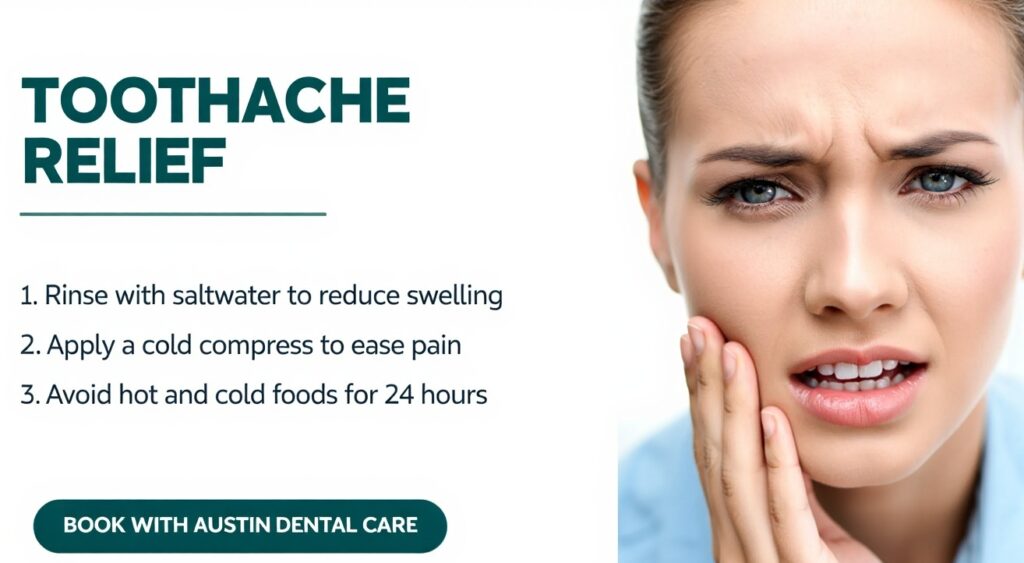
Toothaches can be extremely painful, but there are steps you can take to ease the pain until you can see a dentist. The following are some quick, effective home remedies to ease a toothache.
1. Rinse with Warm Saltwater: Use half a teaspoon of salt with warm water, mix it, and rinse your mouth with it to clean the area and reduce any inflammation.
2. Apply a Cold Compress: Applying an ice pack or cold compress to the outside of your cheek for 15 to 20 minutes can also help. This can reduce swelling.
3. Take Over-the-Counter Pain Relief: Pain can also be temporarily relieved with ibuprofen or acetaminophen. Be sure to follow the recommended dosage guidelines.
4. Avoid Hot, Cold, and Sugary Foods: An effort is made to avoid consuming anything that could make the pain worse, such as anything sweet or anything that is temperature-sensitive.
5. Use Clove Oil for Temporary Relief: Apply a small amount of clove oil to a cotton ball and gently rub it onto the affected area. Clove oil contains eugenol, which is a natural numbing agent.
6. Keep Your Head Elevated: Sleeping with your head elevated can help minimize the throbbing by preventing blood from rushing to the affected area.
Taking Action Quickly
Dental emergencies can be very stressful; however, having the appropriate knowledge to assist you through the time until you can visit your emergency dentist in Austin, TX, can certainly work to your advantage. Whether it’s a toothache or tooth loss, it’s always important to take appropriate measures to ensure the situation is handled effectively.
It’s best to seek immediate dental care to avoid causing more damage. At Austin Dental Care, we’re here to help you when you face unexpected dental care needs. Don’t wait any longer to get dental care. Call us now to schedule an appointment and get the dental care you need to fix your smile.

Questions People Ask About Dental Emergencies
What should I do if I knock out a tooth?
If you knock out a tooth, rinse it gently without scrubbing. If possible, place it back in the socket or keep it in milk. Contact your emergency dentist immediately for the best chance of saving the tooth.
How can I relieve a severe toothache at home?
Rinse with warm saltwater, apply a cold compress, and take over-the-counter pain relievers like ibuprofen. Avoid hot, cold, or sugary foods, and make an appointment with your dentist to address the underlying cause of the pain.
Is a cracked tooth always painful?
A cracked tooth may not always hurt, but it can cause discomfort over time. If left untreated, it can lead to further damage or infection. Visit your dentist as soon as possible for an evaluation.
What should I do if I lose a dental crown?
If you lose a dental crown, save it and avoid chewing on the affected side. You can temporarily use dental wax to cover the exposed tooth until you can see your dentist for a replacement or re-cementing.
How do I know if I have a dental infection?
Signs of a dental infection include persistent pain, swelling, redness, and pus around the gums. If you observe these symptoms, seek immediate dental care to prevent the infection from spreading and causing more serious issues.
Can a dental emergency wait until normal office hours?
Dental emergencies, especially those involving pain, injury, or infection, should never wait. Prompt care is essential to prevent the problem from worsening. Contact your emergency dentist right away for quick relief and appropriate treatment.