
Bad breath, also known as halitosis, is a common problem that most people face at some point. Some conditions may be caused by certain foods; however, in some cases, they can be persistent and quite embarrassing. Most people realize that this problem affects not just the physical but also the psychological aspects.
Halitosis is often linked to poor oral hygiene; however, there can be several reasons for its occurrence that are not immediately clear. The first step in addressing this issue is to identify its causes. If mouth odor is linked to an oral or general health condition, taking immediate steps can benefit you in various ways.
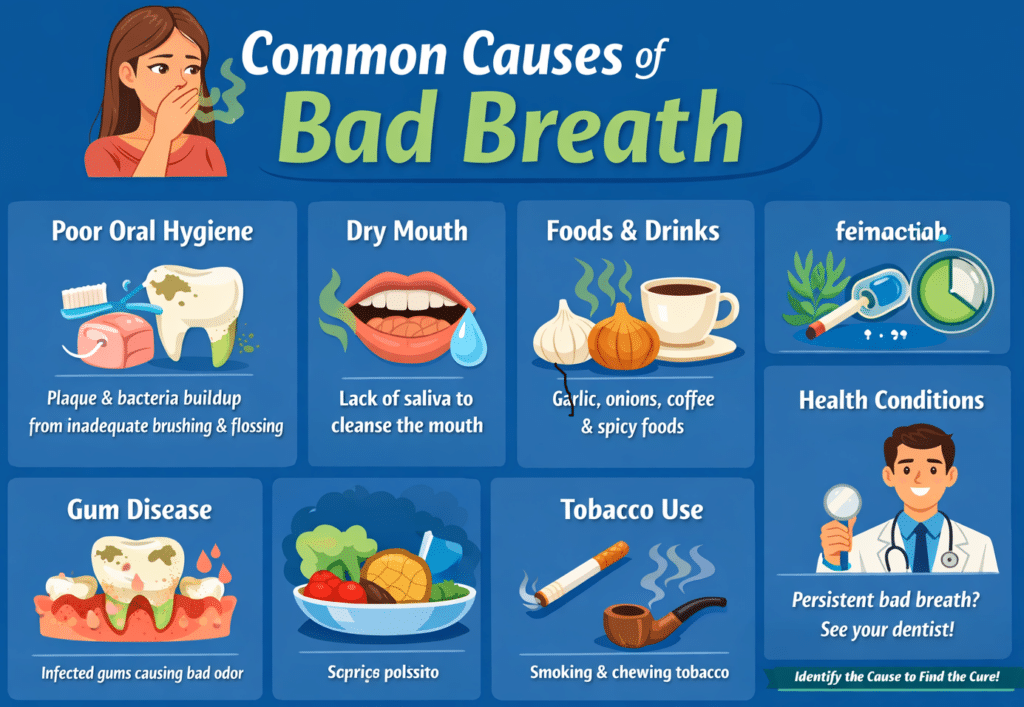
Common Causes of Bad Breath
Bad breath can result from several causes, most of which are related to oral hygiene. By first identifying the possible causes of the issue, the problem can be addressed more easily.
Poor Oral Hygiene
The most common cause of halitosis is related to poor oral hygiene. It has been observed that the accumulation of food particles and bacteria in the mouth can lead to plaque buildup, which causes bad breath. To avoid this and ensure good oral health, regular toothbrushing and flossing are important.
Dry Mouth
A dry mouth, or xerostomia, exists when the mouth contains insufficient saliva to cleanse the mouth of food particles. Saliva discharge plays an essential role in mouth hygiene; without it, bacteria begin to breed, causing halitosis.
A person’s dry mouth can result from a number of factors, such as the use of certain drugs or breathing through the mouth. If this is the issue, you should consult a dentist in Austin, TX, immediately.
Certain Foods and Beverages
Garlic, onions, or spicy foods are common causes of halitosis. The sulfur in these foods is absorbed into the bloodstream and then exhaled, causing Halitosis. Coffee and other beverages can also cause Halitosis by drying the mouth, producing a lingering odor.
Video source: Sources of Bad Breath or Halitosis: Evaluate, Diagnose, and Treat by Fauquier ENT.
Gum Disease
Gum disease, also called periodontitis, is another reason for the issue. Gum infection causes bleeding and the discharge of bacteria, which creates a bad odor. If left untreated, it could even lead to tooth loss.
Tobacco Products
In addition to the production of bad breath, smoking or the use of any tobacco products can also cause gum diseases, Tooth loss, and oral cancers. The products stay in our mouths and cause unpleasant odors.
Health Conditions
In some cases, halitosis can manifest itself as a sign of a medical condition. Medical conditions that can cause halitosis include respiratory infections, diabetes, and gastrointestinal disorders.
In some instances, diseases such as sinus infections and postnasal drips can cause mucus to accumulate. This, together with bacteria, can cause halitosis. Consequently, in case of persistent halitosis in spite of good oral health habits, medical advice should be sought.
How To Fix Bad Breath
There are many effective measures to address a problem like halitosis. Proper oral hygiene habits and a few lifestyle modifications can significantly improve our breath.
Brush and Floss Regularly
The most effective means to both prevent and treat halitosis is to maintain personal oral health habits. This means brushing your teeth at least twice a day with fluoride toothpaste and flossing to remove food particles and plaque from between your teeth. Don’t forget to brush your tongue as well, as it can be a source of the issue.
Stay Hydrated
Drinking a lot of water is also a preventive measure because, for instance, dry mouth is a key cause of halitosis. Additionally, foods and drinks that cause dry mouth, such as coffee or alcohol, should not be consumed in excess.
Use Mouthwash
Mouthwash can help remove bacteria and leave your breath smelling pleasant. A mouthwash that contains no alcohol is a good choice, as alcohol dries out your mouth and makes your breath smell worse. Some mouthwash formulas are designed to kill germs that cause odors, rather than simply covering the smell with a different scent.
Chew Sugar-Free Gum
Chewing sugar-free gum is said to stimulate saliva production, resulting in a moist mouth. In addition, sugar-free gum with xylitol is more desirable because it helps remove bacteria from the mouth.
Quit Smoking
Quitting can have a dramatic impact on your breath and your overall health if you are a smoker. Smoking is one of the top contributors to mouth odor and can also lead to gum disease and oral cancer.
Visit Your Dentist
Regular dental checkups should also be considered for maintaining fresh breath. During a checkup, your dentist will identify and treat the problems contributing to your unpleasant mouth odor. Dental cleanings can remove deposits of tartar and plaque that your brushing and flossing may not remove.
Address Health Conditions
Halitosis is a symptom of a health condition, and it should be managed accordingly. For instance, a person suffering from diabetes should try to control their blood sugar levels to possibly eliminate the issue. Should your mouth odor persist even while you observe good oral hygiene practices, you have to seek medical advice from your health care provider.
When Bad Breath Signals a Bigger Problem
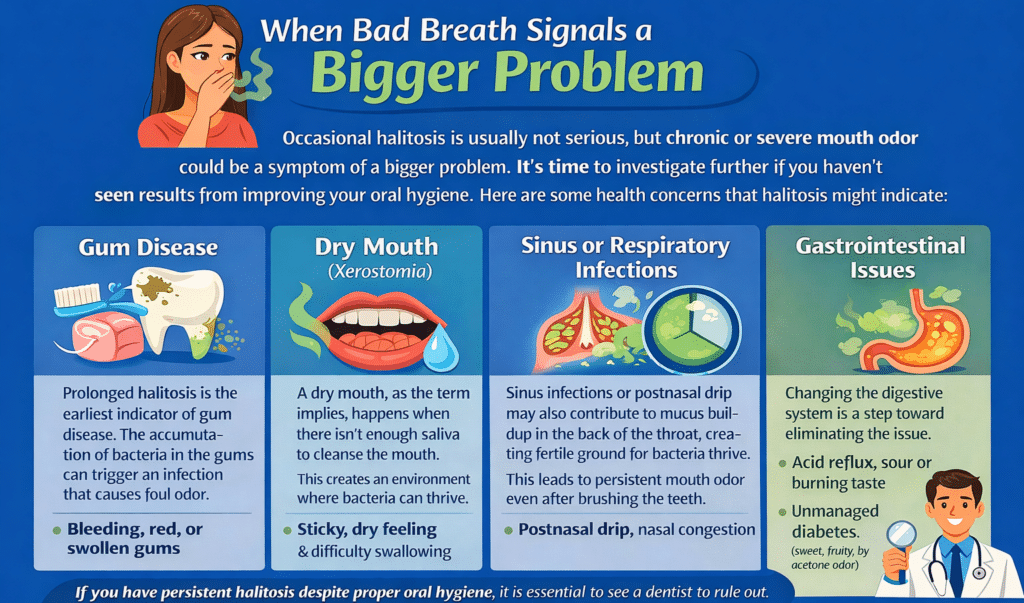
Occasional halitosis is usually not serious, but chronic or severe mouth odor could be a symptom of a bigger problem. It’s time to investigate further if you haven’t seen results from improving your oral hygiene. Here are some health concerns that halitosis might indicate:
Gum Disease
Prolonged halitosis is the earliest indicator of gum disease. The accumulation of bacteria in the gums can trigger an infection that causes foul odor. Early intervention can help prevent later tooth loss and other complications.
Dry Mouth (Xerostomia)
A dry mouth, as the term implies, happens when there isn’t enough saliva to cleanse the mouth. This creates an environment where bacteria can thrive, leading to the issue.
Sinus or Respiratory Infections
Sinus infections or postnasal drip may also contribute to mucus buildup in the back of the throat, creating fertile ground for bacteria to thrive. This leads to persistent mouth odor even after brushing the teeth.
Gastrointestinal Issues
Changing the digestive system is a step toward eliminating the issue. Conditions such as acid reflux or an imbalanced gut can lead to mouth odor. When stomach acid enters the mouth, it can cause a sour or unpleasant odor. Unmanaged diabetes can also cause a distinct sweet, fruity, or sometimes acetone odor to the breath. If this is the reason, immediate help is needed to manage the condition.
If you have persistent halitosis despite proper oral hygiene, it is essential to see a dentist to rule out the following possible causes.
Fresh Breath Starts with a Visit to Your Dentist
Halitosis might seem like a minor problem, but it can sometimes indicate a more serious dental or health issue. Here at Austin Dental Care, we provide the best dental care services to address the causes of the issue and ensure your dental needs are well covered.
Whether you need regular cleaning or treatment for gum disease, we’re here to help you achieve the fresh breath and healthy smile you deserve. If you’re struggling with issues of bad breath, don’t wait any longer and schedule an appointment with us today. We’re here to help you take the first step towards a healthier and fresher mouth.
Questions People Ask About Bad Breath
What are some common causes of bad breath?
Bad breath is often caused by poor oral hygiene, dry mouth, gum disease, certain foods, smoking, or underlying health conditions like diabetes. Proper brushing, flossing, hydration, and regular dental visits can help prevent and address it.
Can bad breath be a sign of a serious health condition?
Yes, persistent bad breath may indicate issues like gum disease, respiratory infections, or digestive disorders. If regular oral care doesn’t improve your breath, it’s important to consult a dentist or healthcare provider for further evaluation.
How can I prevent bad breath after eating garlic or onions?
Brushing your teeth, using mouthwash, drinking water, or chewing sugar-free gum can help neutralize odors after consuming garlic or onions. These steps prevent odor-causing particles from lingering and keep your breath fresh throughout the day.
Is there a specific mouthwash that can help with bad breath?
Choose an alcohol-free mouthwash that targets bacteria and neutralizes bad odors. Look for products with antibacterial ingredients such as chlorhexidine or essential oils that effectively fight bad breath and promote long-lasting freshness without drying your mouth.
Can smoking cause bad breath?
Yes, smoking leads to bad breath by drying out the mouth and introducing foul odors from tobacco. It also increases the risk of gum disease, which worsens breath. Quitting smoking significantly improves breath and overall oral health.
How often should I visit the dentist for bad breath?
Regular dental checkups every six months are recommended to maintain fresh breath. If bad breath persists despite good oral hygiene, scheduling an earlier visit can help address underlying dental issues like gum disease or tooth decay.